

The Fourth Crusade: Act I
The Road to Venice: How the Fourth Crusade Lost Its Way Before It Even Began

Good eve my fair ladies, gents and everything in between.
It would be my pleasure to share with you the wonders, crimes, and travesties brought upon the cities Zara and Constantinople in the year 1202.
Sit down, pull up a chair, or a bean bag if you prefer and pour yourself a strong drink, Sprite perhaps.
This tale starts with a death and the birth of a new and promising career.
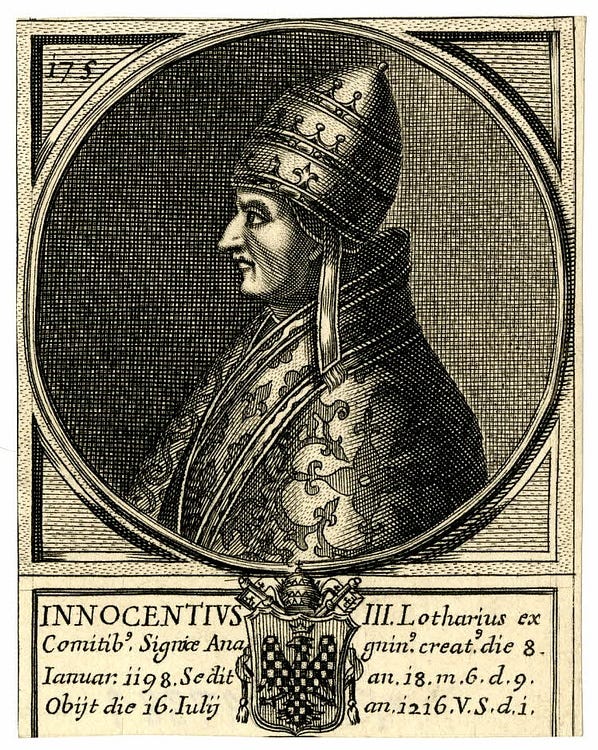
Pope Innocent III, born Lotario di Segni, was young and ambitious as he strolled the halls of the Vatican on the 21st day of February in the year of our lord 1198.
At thirty-eight, he had just become the most influential man in the West.
His predecessor, Pope Celestine III had passed on into another life at the age of ninety-two, and it was time for a new reign to begin. It was less than seven months later in the fall that Innocent called for a great new Crusade. He preached to the masses, lamenting on the failure of the previous ‘Kings Crusade.’ It was time, he said, to reclaim Jerusalem for all of Christendom.
Unfortunately, they would never make it.
The Third Crusade had not gone as planned, though you will find my friends, they rarely do. Some may argue for its success, others may…not. As with most wars, success depends on which shore you stand.
Alas, when the Crusaders turned back in 1192, Jerusalem was still not in Christian Hands.
This new call was meant to be something better, something different, something successful. But those who answered the call were not their predecessors, they did not rule kingdoms, nor did they have the coffers filled with gold that was going to be needed.1
See, you must understand, that recruitment was on a volunteer basis (for nobles that is, unfortunately peasants and vassals were not always provided with choice). This sort of adventure demanded weapons, horses, and most importantly-money. Kings were ideal, but the kings in 1198 were quite busy with their own issues.
England (And sort of France)
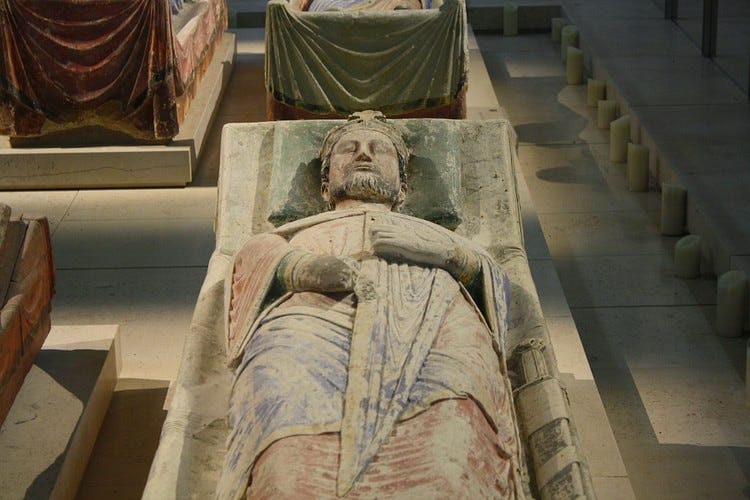
Let us first cross the channel into the lands of the English- a noble land soaked in both drama and rain.
King Richard the First of England, you may know him as the Lionheart, had vowed to return to the holy land to reclaim what he believed belonged to the Christians. But seven months after the call was sent, Richard was shot while fighting in France.
His brother, John (You may know him from Robin Hood), succeeded him. Yet, England was still locked in a battle with the French King, King Phillip II. If there was a limit to how many times two countries could war, France and England would have reached the quota centuries ago.
The Holy Roman Empire
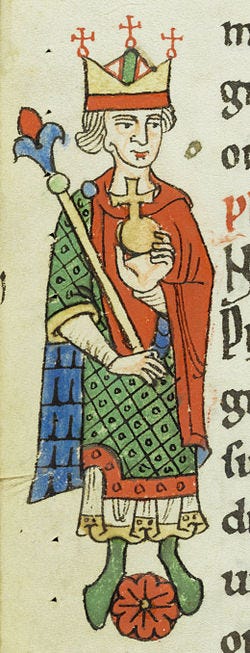
If we take a ship south, and continue our journey, we will arrive shortly in the lands of The Holy Roman Empire. Here you will find a charming landscape- rolling hills, ancient cities, and oh yes, a civil war.
The year before the call, 1197, the Emperor Henry IV passed (hopefully) into Heaven2 of Malaria following a Sicilian rebellion. His death triggered an issue with succession since his true heir, Frederick II3, was still too young to take the throne.
There were two rulers that were elected to the throne:
Phillip of Swabia
Henry’s Brother
Otto of Brunswick
Backed by England and the Pope
Otto came from the powerful and influential family from the Welf dynasty. And Phillip from the House of Hohenstaufen4. They would battle, squabble, and fight until Phillip’s untimely murder in 1208. This allowed Otto to become ruler for a short time until his own defeat in 1215 to the now adult Fredrick II.
I want to stress this point friend, politics have always been, and most likely always will be, convoluted, complicated, and stemmed from personal ambition. These struggles that we have had only a glimpse into, were the product of a thousand years of connected events and would continue to unravel for hundreds more. Perhaps the world today would look completely different if Phillip had lived to defeat Otto, because everything in history is woven together.
Leaders of the Crusade
Now, let us return to Italy to meet the leader of this new grand crusade. He was not a king, nor was he the first choice, but he was an experienced soldier with a chip on his shoulder and the determination to prove himself worthy.
Marquis Boniface Montferrat was chosen to lead this holy quest in 1201 following the death of Theobald II of Champagne. At around fifty-two years old, he was ready, willing, and woefully unprepared for what he would face in Venice only months later.
Baldwin I of Flanders, had much in common with the English king John, for he too hated the french King Phillip II, and often made alliances with those who had come to the same conclusion. On Ash Wednesday 1200, he took the cross, and committed himself to trekking to the east, perhaps in search of redemption, hope, or perchance, power. Baldwin left behind his daughter, still a toddler, and his pregnant wife. He would not see them again for over two years.
Together, Baldwin, Boniface, and their companions would journey to Venice, not knowing that they were to face their soon to be ally, and perhaps the orchestrator of their doom.
Venice
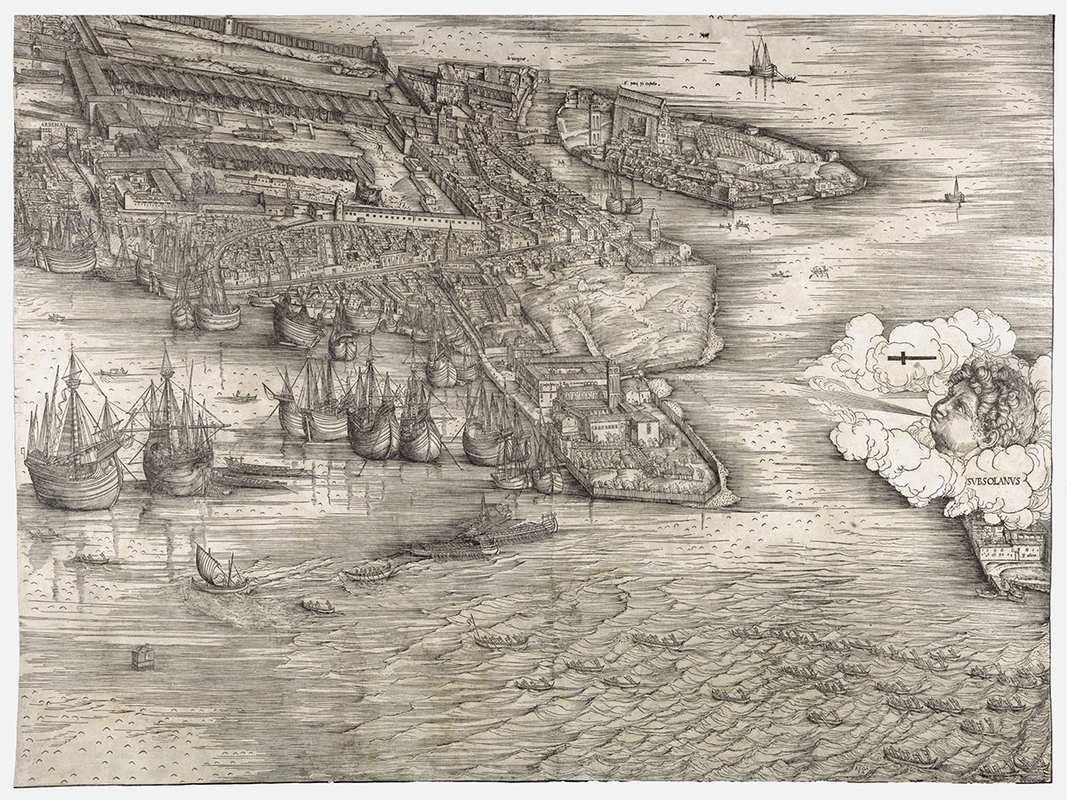
Alas, we are to travel to our final destination for this chapter, Venice. In the twelfth century, this republic was renowned across the ‘known’ world as an economic and trading powerhouse.
If you walk down the city streets today, or as you scroll through Google Maps since you already spent your money on rent and dog food, you may find yourself in Piazza San Marco (or St Mark’s Square).
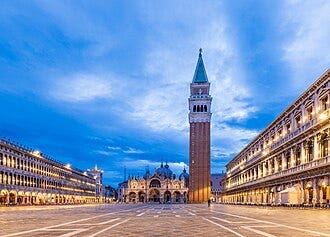
Take it in, look around, bask in the history in which you stand.
There are countless words in all the human languages on earth, and none of them will do justice for what you will see.
Columns.
So many columns. Not just one type of column. No, there are columns on top of columns. There are white columns and round columns. Tall and skinny, short and fat. The sheer magnitude would astound even Apollodorus of Damascus, and he is literally known for building, you guessed it- a giant column.
Now that I have ruined this word for you (forever hopefully), I am going to have you look up.
![[2024] A Guide To St. Mark's Campanile in Venice | Ulysses Travel](https://substackcdn.com/image/fetch/$s_!-2xv!,f_auto,q_auto:good,fl_progressive:steep/https%3A%2F%2Fsubstack-post-media.s3.amazonaws.com%2Fpublic%2Fimages%2Fddf2c4b7-99c7-4089-bb8f-20f28b0ae949_1920x1275.jpeg "[2024] A Guide To St. Mark's Campanile in Venice | Ulysses Travel")
No. Not there, though St Mark's Campanile is impressive. Turn around.
There you go. Do you see it?
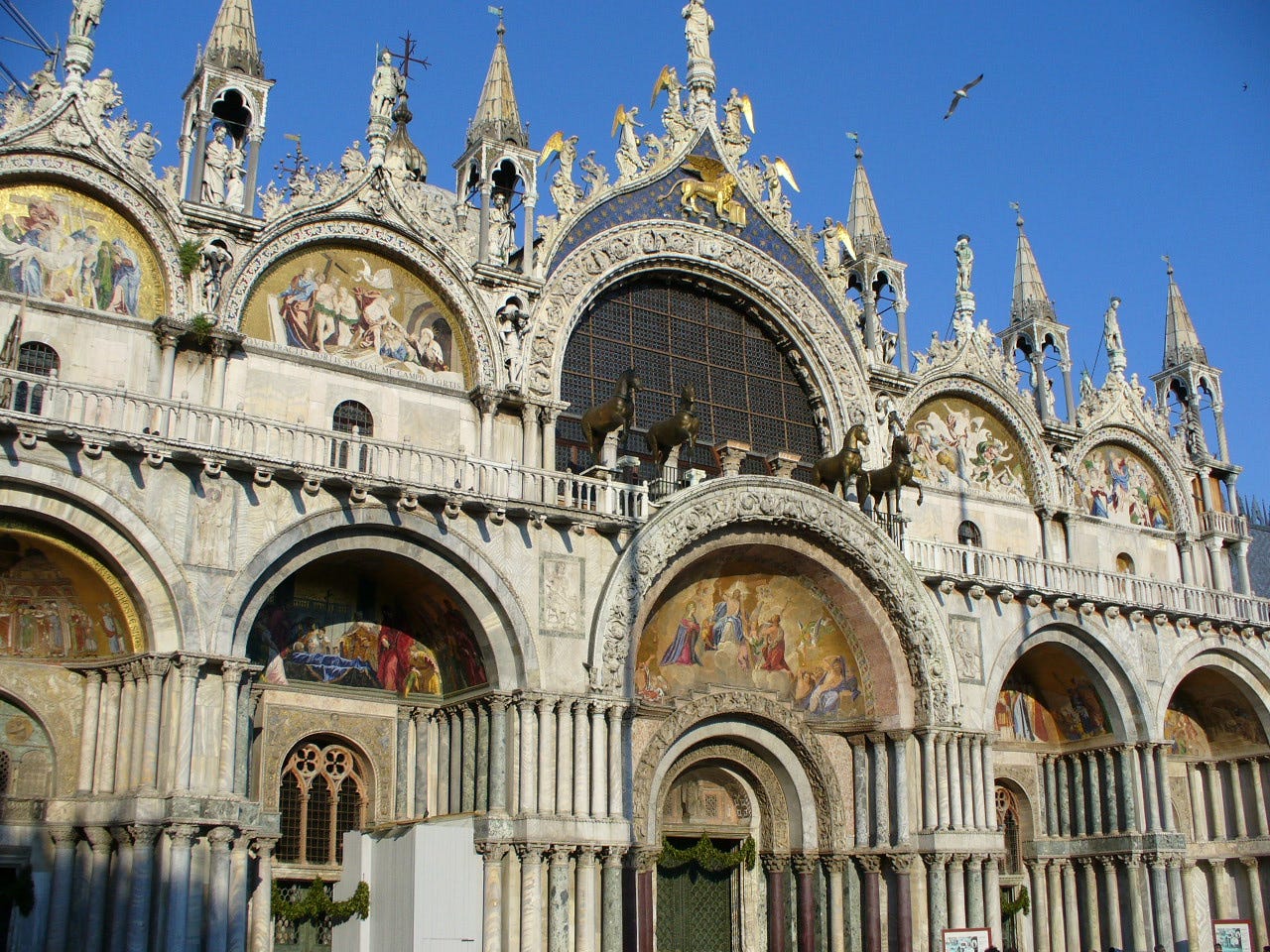
Above the door to the Basilica di San Marco, you will see four impressive equine statues with collars around their necks. Hundreds of years ago they adorned the Hippodrome of Constantinople, their golden and regal bodies mid stride.
The Triumphal Quadriga is where we are going to begin and end our story.
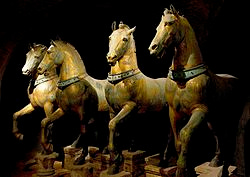
And now, you are going to meet the man responsible for their…new home.
The Doge
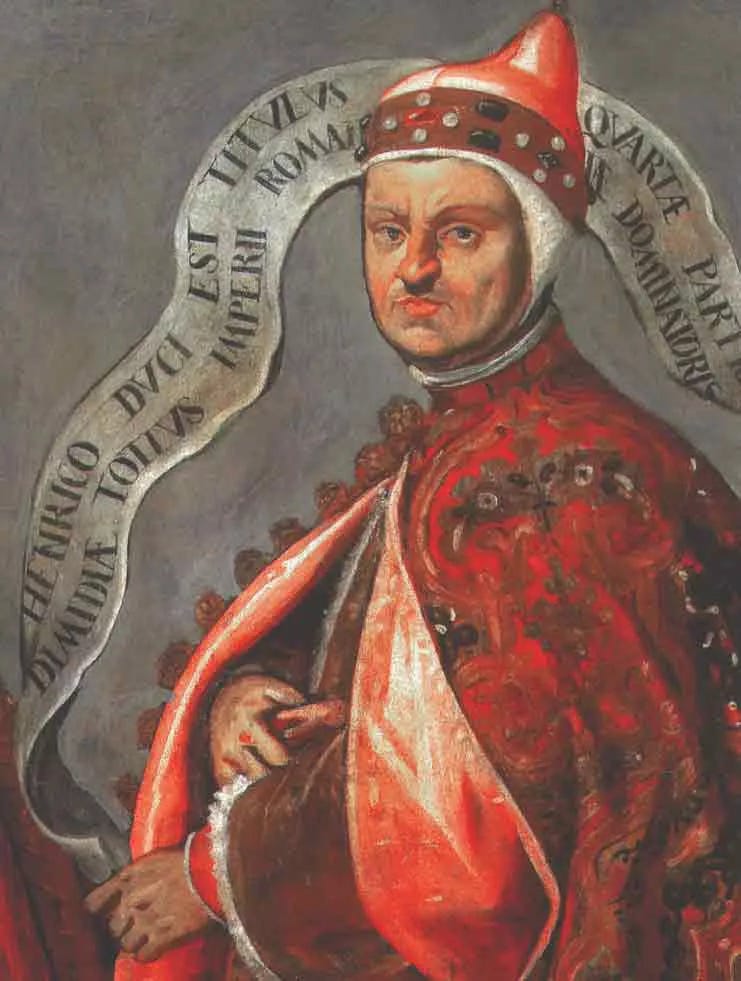
By the time the crusaders arrived in Venice, Doge Enrico Dandolo was already a successful man well past his prime. Nine years prior he had stepped into his role as leader of the city at the ripe old age of eighty-four years old. Before his promotion, he had his hand in the attempt to solve the crisis in Constantinople in 1171-11725 and in the restoration of the Venetian quarter in the Byzantine city.
A year into his Dogeship, he commanded an attack on the city which had once been a part of the Venetian Republic, Zara (yes THAT Zara). It was Dandolo that proposed reforms to the coinage which resulted in a new coin, the silver Grosso. He had proven himself to be cunning and cutthroat, willing to do whatever was necessary to ensure Venice’s superiority.
And he did it all nearly blind.
As you return your gaze upon the square, or squint your eyes nearly closed if you want to put yourself in the Doge’s shoes, you can almost see them there, standing tall and negotiating what will be the future ruin of The Fourth Crusade.
Next Up…The Empire Strikes Back: No Really, Multiple Times in Fact

As always, thank you all for reading. Posting something historical is always nerve wracking, especially since I want to do the story justice and ensure accuracy. If you have any notes, feel free to share.
Spoiler for those that read these footnotes. They will never have the funds.
Though we have no way of knowing for sure, since I do not have a mode of transportation that will take us there AND bring us back. According to the Pope (who has never been wrong), he must be, so we can take his word for it.
Named for his legendary grandfather Fredrick Barbarossa
The rivalry between these two horses started centuries before. This was the start of the Guelph and Ghibelline conflict(though the matter is FAR more complicated than a simple rivalry).
You see, the Venetians had cut a deal with Constantinople in 992, where they would provide ships as part of their navy, and in return they would be tax exempt. This of course eventually caused issues with Byzantine traders who did have to pay taxes.
To add on to this, the Orthodox Church and the Catholic Church did NOT get along. This is a very complex issue, but let’s boil this down, ramen noodle style. You see books can be (and have been) written on The Great Schism of 1054. This is NOT that. The East spoke Greek, the West, Latin. The Catholics believed the Pope was the head of the entire church, the Orthodox believed in shared power. The West believed the Holy Spirit was from the Father AND Son, the East believed it was only the Father.
To bring this all to a head, the Latins and the Byzantines were not BFFs and separated.
This was so good! I know nothing about the crusades and you made it so entertaining! Historian and fantasy writer extraordinaire 😍
This was such an interesting read and I'm so looking forward to more installments in the series! I love the addition of photos and the conversational tone SO MUCH.